
What to Do When Your Roof Is Leaking and No Roofer Can Come Yet
Leaking at night, on a weekend or in the middle of a storm, and nobody can come out? Take a breath. This happens to a lot of homeowners, and there’s a clear way through it. Here’s what to do when your roof is leaking, step by step, from a local roofer.
- 4.9 from 725 Google reviews
- Owens Corning Platinum Preferred
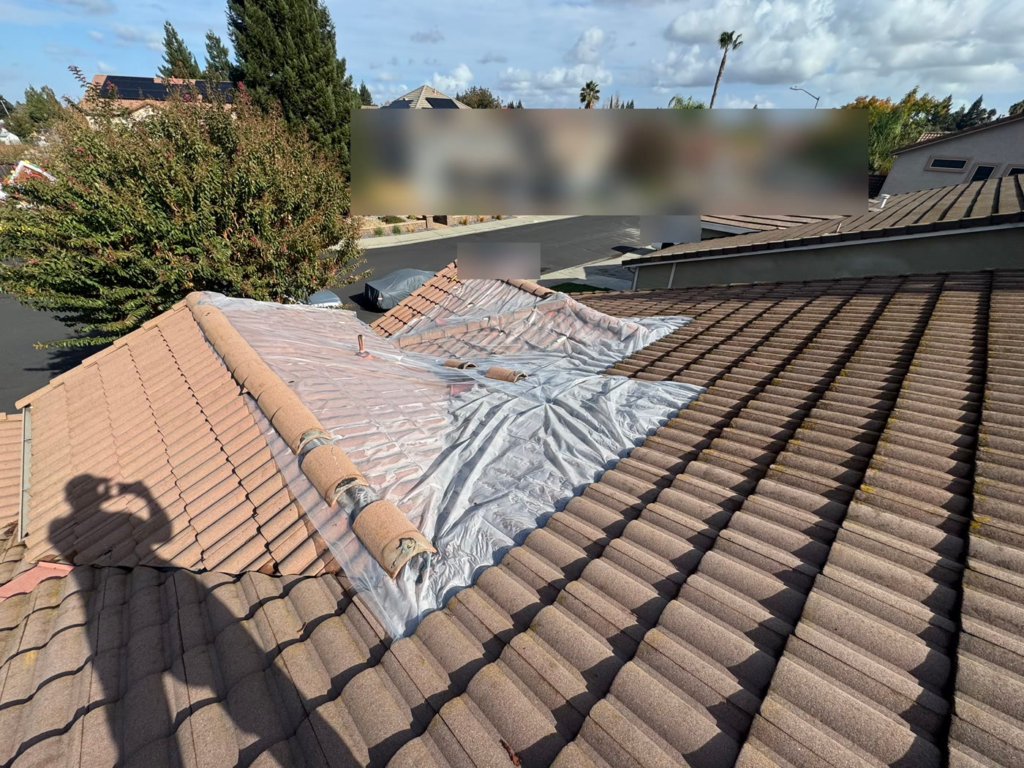
- 2–10 year workmanship warranty on most repairs
THE SHORT ANSWER
Catch the water, call your insurance, get it tarped
Put a bucket under the drip, take photos, and call your homeowners insurance about getting the roof tarped. Once it’s tarped, you can make it through the rain and take your time getting a couple of estimates, instead of hiring the first roofer who can come out.
Why you might have to wait a few days
When a storm hits, roofers get flooded with calls. Most of us are booked up after the first handful of calls, and a single storm can bring dozens more in one day. A crew can only get to so many homes a day, and that’s true for pretty much every roofing company.
So it’s normal to be on your own with a leak for a few days, sometimes up to a week, before a roofer can get there. That’s OK. The steps below keep the damage small until then.
What to do when your roof is leaking: 5 steps
1. Catch the water
Put a bucket, a trash can or a big pot under the drip, with a towel underneath to stop splashing. Move furniture, rugs and electronics out of the way. The goal is to keep water off your drywall and floors.
- If the ceiling is bulging with water, put a bucket under it and poke a small hole in the center of the bulge with a screwdriver, so it drains in one spot instead of bringing the ceiling down.
- If water is near a light, fan or outlet, turn off that circuit at the breaker panel.
- Stay off the roof. A wet roof is slippery, especially in the dark or in wind. Nothing up there is worth a fall.
- Don’t caulk the drip from inside. The water is still getting in up top, and it’ll just find another way down.
2. Take photos and video
Before you clean anything up, take photos and video of the wet ceiling, the drip, the stains and anything that got wet. If you can safely look in the attic, get photos there too. Your insurance company will want them, and they help the roofer find the leak faster.
3. Call your homeowners insurance
Call your insurance company’s claims line or your agent and tell them your roof is leaking. Ask two questions:
- Can they send an emergency crew to tarp the roof? Many insurance companies work with emergency service companies that do this.
- If not, will they pay you back for a tarp you arrange yourself? Keep every receipt.
Roofers aren’t an emergency service. Your insurance company is often the fastest way to get a tarp on.
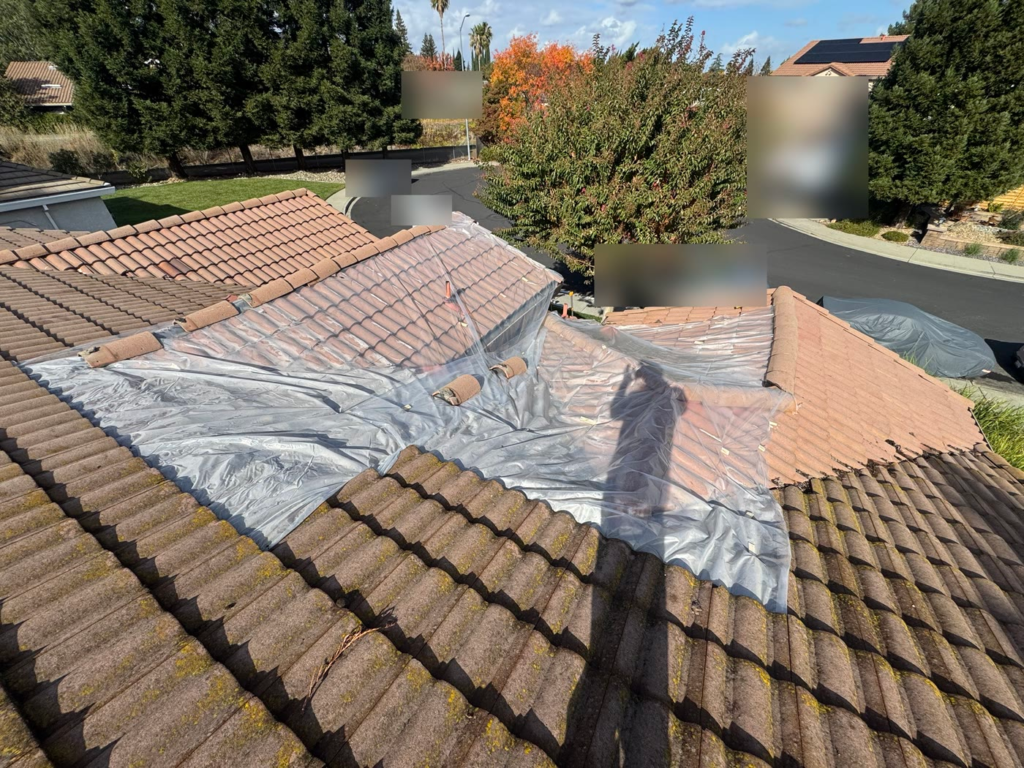
4. Get the roof tarped
Once a tarp is on, you can make it through the rain and the storm. A tarp isn’t a repair, but it stops more water from coming in and buys you time. A tarp that’s secured well can stay on the roof for up to 3–6 months without issues.
California’s Department of Insurance gives the same advice: cover roof openings when it’s safe, keep the receipts, and hold off on big permanent repairs until the adjuster has looked.
5. Take your time getting estimates
This is where the tarp really pays off. With the roof covered, you don’t have to hire the first roofer who answers the phone just because they’re the only one who can come. Get estimates from a couple of reputable local roofers and compare:
- Who explains the problem clearly, with photos?
- Who has experience with your type of roof (tile, shingle or flat)?
- Who gives you a written quote that fits your budget, and what warranty comes with it?
And if a roofer does come out sooner and you feel good about them and the plan, that’s fine too. The point is to make the decision because you’re comfortable with it, not because you’re desperate.
Will insurance pay for the roof repair?
Sometimes. It depends on what caused the leak and on your policy.
- Usually covered: sudden damage, like wind blowing shingles or tiles off, hail, or a fallen tree or branch.
- Usually not covered: leaks from age, wear and tear, or lack of maintenance.
On tile roofs, a common example is a leak from clogged valley channels or flashings packed with leaves and debris, so water can’t drain. Insurance companies usually treat that as a maintenance issue, so it usually isn’t covered. The tarp may not be covered either, and many policies cap emergency costs, so ask your insurer what applies to you.
Questions about your coverage or a claim? The California Department of Insurance has a free consumer hotline at 800-927-4357 and a Residential Property Claims Guide.
If insurance won’t cover it
A good, reputable local roofing company can still take on the job. You can pay out of pocket or finance it; most roofing companies offer financing. Get the price in writing, and check the contractor’s license on the CSLB website.
When you’re ready, we’re here
Once the water is under control, Roof Recovery can come out for a free inspection. You get photos of everything we find and a written quote, with no pressure. We repair tile, shingle and flat roofs across the Sacramento area. If insurance is involved, we help committed customers through the claim.
More on roof leak repair, tile roof repair and what a roof repair costs.
Common questions about a leaking roof
What should I do first when my roof starts leaking?
Catch the water with a bucket and move your things out of the way. Then take photos, call your homeowners insurance and ask about getting the roof tarped.
Should I go on the roof to stop the leak myself?
No. A wet roof is slippery, especially at night or in wind. Keep the water under control from inside and leave the roof to a tarp crew or a roofer.
Does homeowners insurance tarp your roof?
Many insurance companies can send an emergency crew to tarp the roof or will pay you back for a tarp, if the damage is covered. Call your insurer and ask, and keep your receipts.
Does insurance cover a roof leak from clogged valleys?
Usually not. A leak from clogged valleys or flashings is usually treated as a maintenance issue. Leaks from sudden damage like wind or a fallen tree are more likely to be covered.
How long can a tarp stay on a roof?
A tarp that’s secured well can stay on the roof for up to 3–6 months without issues. That gives you time to get estimates and schedule the repair.
Related services
Ready for a roofer to take a look?
Free inspection, photos of everything we find, and a written quote, with no pressure.